How to calculate Income Tax in 2025-26: The Ultimate Guide for Salaried & Business Owners
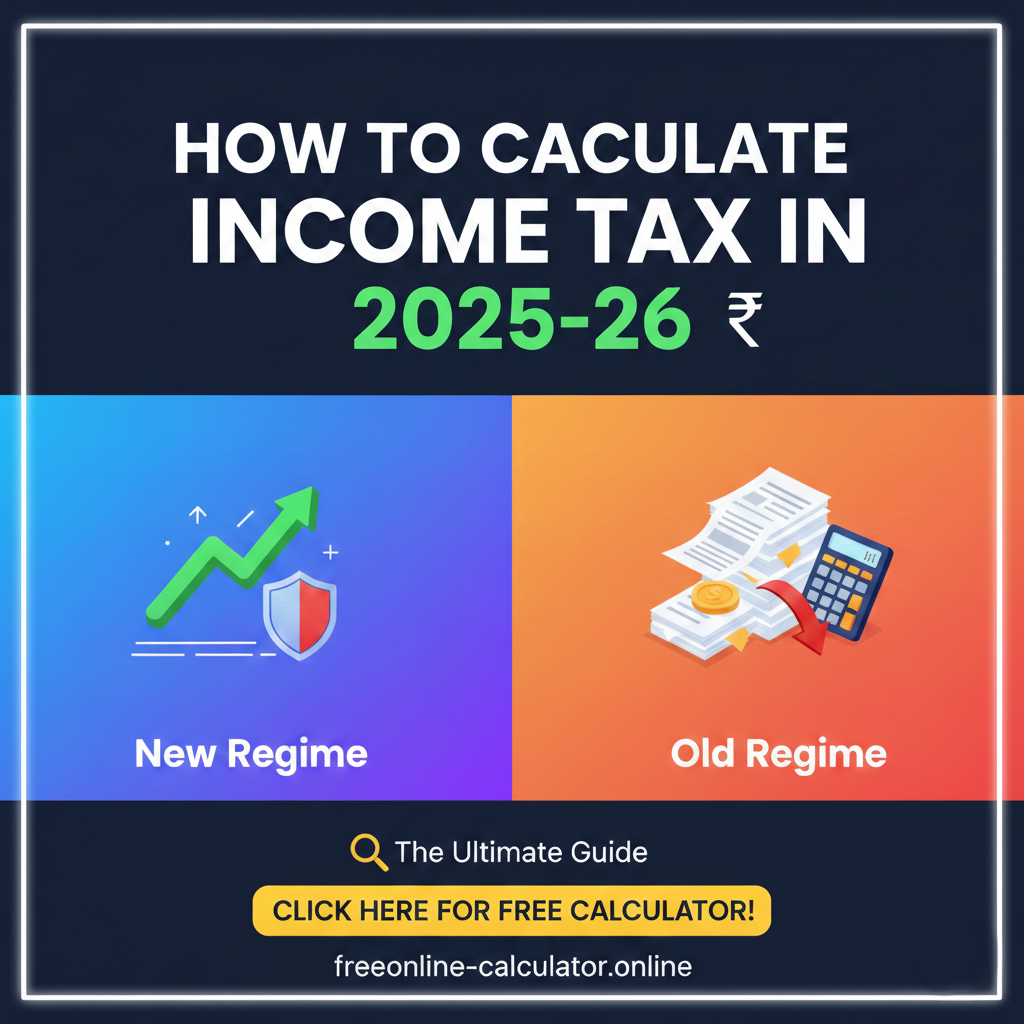
Knowing how to calculate Income Tax in 2025-26 is the first step toward smart financial planning. With the latest updates from the Union Budget 2025, the tax landscape has shifted significantly. Whether you are a salaried professional, a freelancer, or a small business owner, understanding the new tax slabs, exemptions, and rebates is crucial to avoid penalties and maximize savings.
Understanding the Financial Year 2025-26 (Assessment Year 2026-27)
In India, the income you earn between April 1, 2025, and March 31, 2026, falls under Financial Year (FY) 2025-26. The tax on this income is assessed in the following year, known as Assessment Year (AY) 2026-27. To stay compliant with the Income Tax Department guidelines, you must choose between two tax systems: the Old Tax Regime and the New Tax Regime.
Latest New Tax Regime Slabs for FY 2025-26
The New Tax Regime is now the default regime. For the year 2025-26, the government has further simplified the slabs to provide relief to middle-class earners. If you want to know how to calculate Income Tax in 2025-26 under this system, here are the latest rates:
| Income Slab (INR) | Tax Rate (%) |
|---|---|
| Up to ₹4,00,000 | Nil |
| ₹4,00,001 – ₹8,00,000 | 5% |
| ₹8,00,001 – ₹12,00,000 | 10% |
| ₹12,00,001 – ₹16,00,000 | 15% |
| ₹16,00,001 – ₹20,00,000 | 20% |
| ₹20,00,001 – ₹24,00,000 | 25% |
| Above ₹24,00,000 | 30% |
Pro Tip: Under the New Regime, if your taxable income does not exceed ₹12 Lakhs, you are eligible for a full tax rebate under Section 87A, making your effective tax zero!
Step-by-Step: How to calculate Income Tax in 2025-26 Manually
Calculating your tax might seem daunting, but it follows a logical flow. Here is a breakdown of the process:
Step 1: Calculate Your Gross Total Income
Add up all your sources of income, including:
- Salary/Pension
- Rental Income from House Property
- Capital Gains (Mutual Funds, Stocks, Real Estate)
- Income from Other Sources (Savings Bank Interest, Fixed Deposits)
If you have any business loans or personal liabilities, you can use our Loan Calculator to manage your EMI outflows, which helps in better tax planning.
Step 2: Subtract Standard Deduction
For salaried individuals, a Standard Deduction of ₹75,000 is available in the New Tax Regime for FY 2025-26 (increased from ₹50,000). This is a flat deduction that reduces your taxable income immediately.
Step 3: Apply the Relevant Tax Slabs
Divide your remaining income into the slabs mentioned above. For example, if your income after deduction is ₹15,00,000:
- First ₹4L: 0% = ₹0
- Next ₹4L (4-8L): 5% = ₹20,000
- Next ₹4L (8-12L): 10% = ₹40,000
- Remaining ₹3L (12-15L): 15% = ₹45,000
- Total Tax: ₹1,05,000
Old Tax Regime vs. New Tax Regime: Which is Better?
The Old Tax Regime allows you to claim deductions like Section 80C (PPF, LIC, ELSS), 80D (Health Insurance), and HRA. However, the slab rates are higher. The New Tax Regime offers lower rates but removes most deductions.
If you are someone who focuses heavily on fitness and health to reduce future medical costs, checking your health status using a BMR Calculator might motivate you to invest in 80D-compliant health insurance plans, which are highly beneficial under the Old Regime.
When to choose the Old Regime:
- If your total deductions (80C, 80D, HRA, Interest on Home Loan) exceed ₹3.75 Lakhs – ₹4 Lakhs.
- If you have a high Home Loan interest component.
Important Tax Terms You Must Know
1. Section 87A Rebate
This is a provision that gives a tax credit to small taxpayers. In the New Regime for 2025-26, this rebate covers income up to ₹12 Lakhs. In the Old Regime, it only covers up to ₹5 Lakhs.
2. Health and Education Cess
After calculating your total tax, you must add an additional 4% Health and Education Cess on the tax amount itself. This is mandatory for both regimes.
3. Surcharge
For high-income individuals (earning above ₹50 Lakhs), a surcharge is applied ranging from 10% to 37% (capped at 25% in the New Regime).
Common Mistakes to Avoid While Calculating Income Tax
Even when people know how to calculate Income Tax in 2025-26, they often make these errors:
- Ignoring Interest Income: Many forget to add interest from savings accounts, which is taxable.
- Wrong Regime Selection: Selecting the New Regime when the Old one would save more money (and vice versa).
- Missing Deadlines: Filing after July 31st leads to late fees under Section 234F.
Conclusion
Understanding how to calculate Income Tax in 2025-26 empowers you to make better investment choices. The New Tax Regime is designed for simplicity, while the Old Tax Regime rewards those who save and invest. Always use reliable online tools and consult a Chartered Accountant for complex cases.
For more financial and health-related tools to help you stay on track, visit our Free Online Calculator portal today!
Frequently Asked Questions (FAQ)
Q1: What is the basic exemption limit for FY 2025-26?
A: Under the New Regime, it is ₹4 Lakhs. Under the Old Regime, it remains ₹2.5 Lakhs for individuals below 60 years.
Q2: Is HRA available in the New Tax Regime?
A: No, House Rent Allowance (HRA) exemptions cannot be claimed in the New Tax Regime.
Q3: How much can I save with the Standard Deduction?
A: You can reduce your taxable income by ₹75,000 in the New Regime, which can save you up to ₹22,500 in taxes depending on your slab.